Borescope


















Results for Borescope
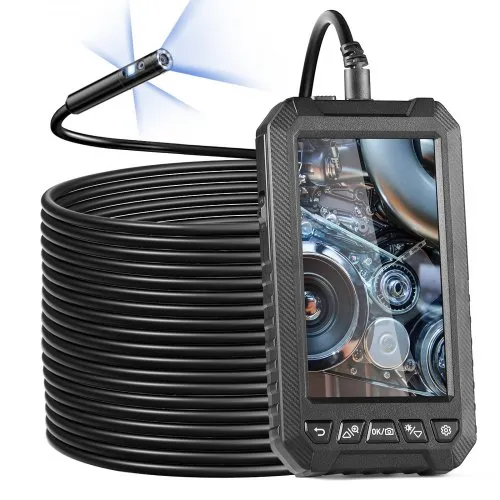
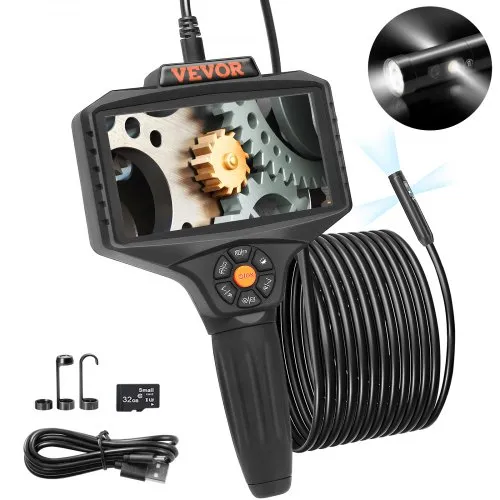
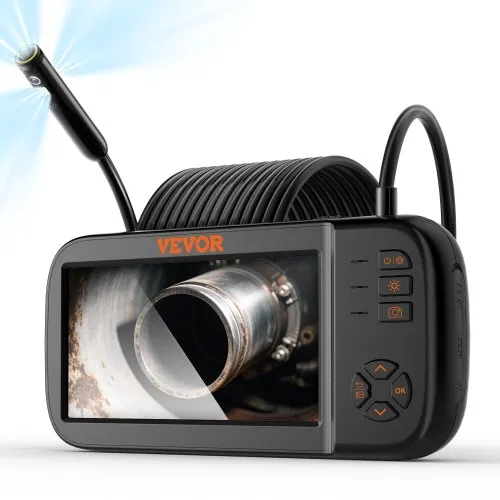
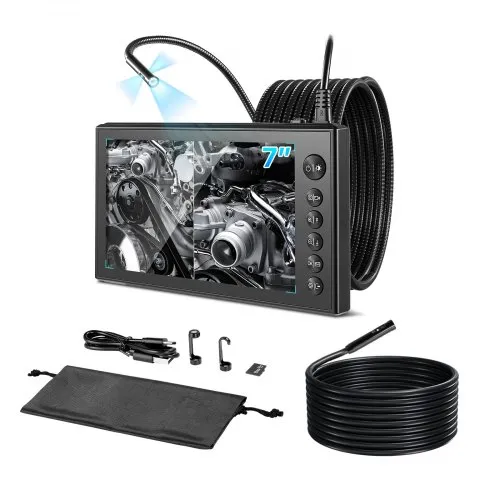
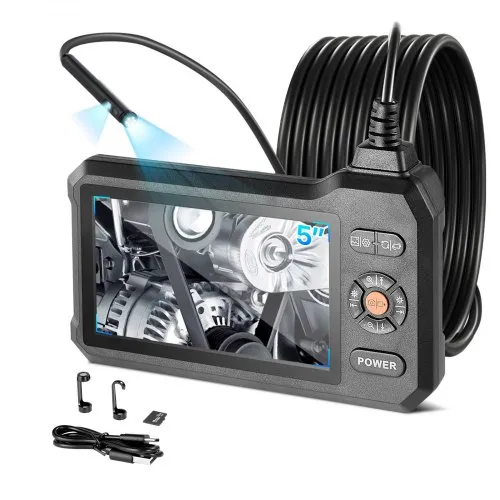
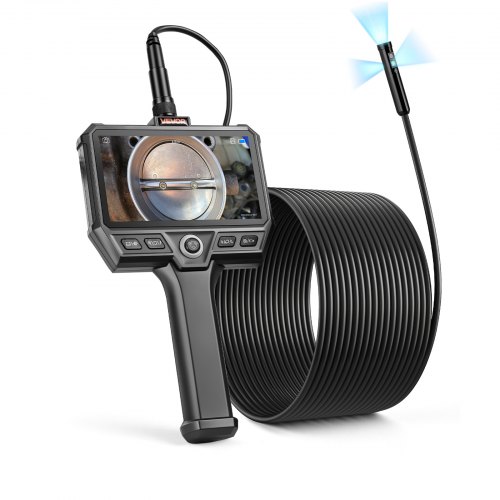
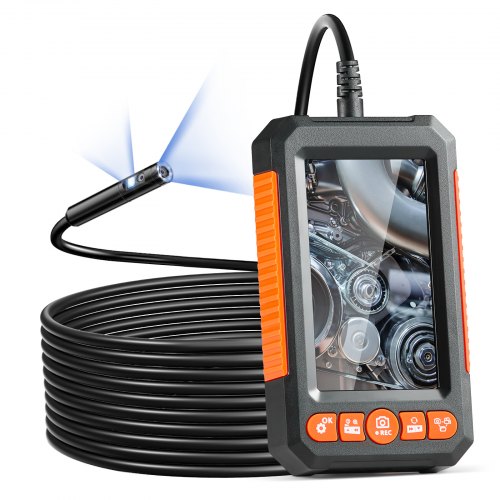
A borescope is an optical inspection tool with a camera and lights at the tip of a thin probe, used to look inside machinery, engines and structures without taking them apart. This category covers articulating borescopes with steerable tips, single, dual and triple-lens borescopes, rotating-probe models and dual-cable kits. They are used by mechanics, plumbers, electricians, HVAC technicians and maintenance crews. The probe enters through a small opening such as a spark plug hole or drilled wall, and a screen shows and records the live image. Unlike a mirror or flashlight, it sees around corners and into sealed cavities.
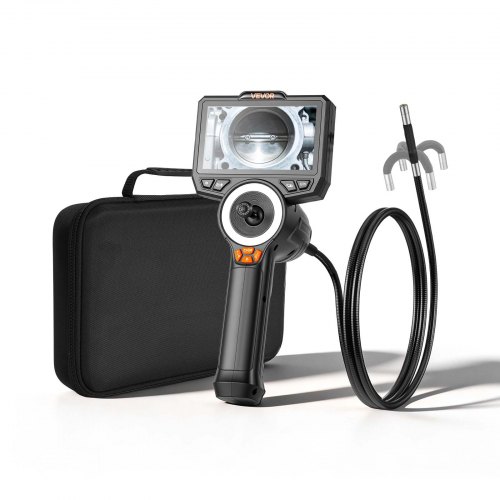
The range splits by how the probe sees. 4-way articulating borescopes steer through 360° using a joystick, and two-way models bend through 180°, both on 4.9 ft cables for engine and machine work. Dual-lens borescopes switch between front and side views, while triple-lens borescopes show front and both sides at once on a split screen. A rotating-probe borescope turns its camera a full 360° on a 16.4 ft rigid cable. For long runs, ultra-rigid cable borescopes reach 32.8 ft, and a dual-cable kit swaps between 16.4 ft and 9.8 ft cables with a 7 in screen. Most models offer 1080P lenses, 8X zoom, adjustable LEDs and IP67 waterproofing.
Five things decide which one fits:
- Image resolution: lens resolution, which sets how much fine detail you can see.
- Display: screen size, which affects how easily you read the image.
- Zoom: digital zoom range for enlarging small faults.
- Lighting: number of LEDs and brightness levels for dark spaces.
- Cable type: flexible, semi-rigid or a mix, which changes how the probe moves.
Browse all borescopes to compare models side by side, or step back to the wider inspection cameras range.
Borescope Types at a Glance
| Type | How It Works | Best For |
|---|---|---|
| 4-way articulating borescopes | Joystick steers the tip up, down, left and right | Engine cylinders and tight machinery |
| Two-way articulating borescopes | Tip bends in one plane for quick angle changes | Engine bays and wall cavities |
| Dual-lens borescopes | Button switches between front and side cameras | Pipe walls, joints and fittings |
| Triple-lens borescopes | Split screen shows front and both sides together | Drains, ducts and long pipe runs |
| Rotating-probe borescopes | Camera head turns a full circle inside the space | Inspecting cavities without moving the cable |
| Dual-cable borescope kits | Swappable cables for short and long reach | Technicians who switch between jobs |
Professional Borescopes for Engine, Pipe, Wall, and Mechanical Inspections
Do you have trouble seeing inside engines, walls, pipes, drains, or machines? A borescope lets you see things in real time in tight spaces that the human eye can't reach. This tool makes it easy to find problems without taking apart whole systems. This gives you clear images and helps you solve problems quickly, whether you're inspecting a car engine, checking for pipe blockages, finding wiring behind walls, or inspecting mechanical parts. VEVOR offers waterproof probes with HD lenses and long cables to meet the needs of technicians, homeowners, and DIYers.
Buying Considerations for a Borescope
Right Resolution for Clear Diagnostics
When choosing a borescope, image resolution is one of the most important factors to consider. It is because the clearer the pictures are, the faster and more accurately you can find problems. High-definition lenses reveal sharp details, helping find cracks, corrosion, leaks, blockages, and other problems the naked eye can't see. For mechanical inspections that require examining very fine surface conditions, such as engine valves, spark plug threads, or HVAC parts, a borescope camera with 1080P or higher resolution is best.
For simple tasks, lower-resolution options may still work, but HD imaging is especially helpful for professionals who conduct inspections. It is easier to zoom in on small areas without losing detail with a borescope inspection camera that has a higher pixel density. It is especially helpful for electricians looking for wire damage in conduits or for plumbers checking the walls of pipes. When looking at dark, tight spaces, high-resolution, adjustable LED lighting works together to produce clear, realistic images.
Resolution is also important for specialized tools like an articulating borescope, which lets you see things from different angles by moving the tip. When the sensor is of good quality, even small bends in the camera head won't change the picture. Better resolution means fewer scans, which saves time and makes work sites more accurate.
Selecting Cable Length for Your Inspection Depth
The length of the cable significantly affects how well a borescope can reach deep, narrow, or blocked areas. Shorter cables give you great control when working on engines, checking spark plug holes, and evaluating parts inside. These choices are often used with an automotive borescope, where accuracy is more important than reach. A semi-rigid short cable keeps things stable, so technicians can move the probe exactly where it needs to go without it wobbling.
Longer cables give you a lot more power for plumbing, building, and home inspection jobs. A borescope inspection camera with a 15 to 50-foot cable lets users look inside drains, vents, wall cavities, or crawl spaces without cutting into structures. Flexible snake cables can navigate elbows, bends, and junctions, allowing deep interior inspections without disassembly. It saves a lot of time and reduces repair costs.
The cable's length is important, but so is the material and its flexibility. Reinforced braided cables don't wear down as easily when they slide through pipes, and waterproof-rated cables can be used in wet areas. A borescope for iPhone usually comes with a light, portable cable that is good for home and DIY use. Professional-grade models, on the other hand, feature thicker, tougher cables that can withstand heavy use.
How Resolution and Cable Length Influence Real-World Performance
The performance of a borescope in real-world inspection settings depends on the camera's resolution and the cable length. High resolution ensures that even the tiniest flaws, such as hairline cracks or mineral deposits, are visible. The right cable length ensures the camera can physically reach the problem area. When these two things work together, tasks like plumbing inspections, car diagnostics, or structural evaluations become much easier.
An automotive borescope with great resolution and a shorter, semi-rigid cable lets technicians move around inside cylinders and combustion chambers while taking clear, detailed videos. Plumbing professionals, on the other hand, use long, flexible cables and bright LED lights to navigate pipes and pinpoint leaks or blockages with precision.
An articulating borescope is useful for people who need to see things from different angles. The movable camera head works best with high-clarity imaging. This combination makes it easier to navigate around obstacles and view structural parts from different angles without pulling the cable back.
Choosing a Borescope by Job
The table below matches each job's opening size, reach and viewing need to the borescope on this page that handles them.
| Job | Smallest Opening | Required Reach | Viewing Need | Recommended Borescope | Main Limitation |
|---|---|---|---|---|---|
| Engine cylinders through spark plug holes | 3.9 mm and up | Up to 4.9 ft | Bend the tip to see cylinder walls and valves | Two-Way Articulating Borescope, 0.15 in Lens | 1280 x 720 lens, lower than the 1080P models on this page |
| Engine bays and machinery with parts in the way | 6.2 mm and up | Up to 4.9 ft | Steer up, down, left and right around parts | 4-Way Articulating Endoscope, 6 in Screen, 7000mAh | Only 4.9 ft of cable, so it works close to the access point |
| Inside housings and behind panels | 8 mm and up | Up to 4.9 ft | Front and side views while bending the tip | 2-Way Dual-Lens Articulating Endoscope | Bends through 180° only, and the 8 mm head needs a wider hole |
| Wall cavities and enclosed voids | 8 mm and up | Up to 16.4 ft | Turn the view 360° without moving the cable | Rotating-Probe Endoscope, 16.4 ft | Zoom is not specified on the product page |
| Drains and long pipe runs | 8 mm and up | Up to 49.2 ft | Front and side views along the pipe wall | Dual Lens Endoscope, 49.2 ft | Cannot steer, and tight bends such as P-traps are hard to pass |
Features and Display Options Overview
Modern display types and features make a borescope much more useful, easier to use, and more convenient. Many units come with adjustable LED lights, making it easy to see into dark pipes, engine bays, and wall cavities. Waterproof probes and tough cable coatings make it safe to use in wet or dirty places. Magnetic or hook attachments give workers who need to use their hands-free more options when doing mechanical or plumbing inspections.
Another important feature is the display type. Some models come with built-in HD screens that let you watch in real time with high brightness and anti-glare surfaces. These are great for use outside or on the job site. Some of them, like the iPhone borescope, connect wirelessly to smartphones and display large, easy-to-share images. Multi-lens cameras let you see more, and more advanced borescope inspection camera designs can record video or save photos for client reports and records.
Best-Seller Comparison
Compare the five best-selling borescopes below by the five factors above: image resolution, display, zoom, lighting and cable type.
| Product | Image Resolution | Display | Zoom | Lighting | Cable Type |
|---|---|---|---|---|---|
| 4-Way Articulating Endoscope, True 1080P | 1920 x 1080 | 4.5 in IPS | 8X digital | 6 LEDs | Flexible snake |
| 4-Way Articulating Endoscope, 6 in Screen, 7000mAh | 1920 x 1080 in the title, 1280 x 720 in the description | 6 in IPS | 8X in five steps (1X to 8X) | 6 LEDs | Flexible snake with an oil-resistant jacket |
| Dual Lens Endoscope Camera, 16.4 ft | 1920 x 1080 | 4.3 in IPS | 4X digital | 8 + 1 LEDs | Semi-rigid, holds its shape |
| 4-Way Articulating Endoscope, 4.5 in Screen, 0.24 in Probe | 1920 x 1080 | 4.5 in IPS | 8X in five steps (1X to 8X) | 6 LEDs | Flexible snake |
| Triple Lens Borescope, 49.2 ft | 1920 x 1080 | 5 in IPS | 2X digital | 8 + 2 LEDs | Semi-rigid, holds its shape |
Why Choose VEVOR Borescope Inspection Tools?
VEVOR's borescope collection offers high-quality images, sturdy construction, a variety of cable options, and fair prices for both homeowners and professionals. Each model features HD screens, movable heads, waterproof probes, and long inspection ranges, making them very clear and reliable. Check out all of VEVOR's products to compare features, read customer reviews, and find the best borescope for your plumbing, HVAC, automotive, or home inspection needs. To learn more and buy today, click on any product page.
Professional Borescopes for Engine, Pipe, Wall, and Mechanical Inspections
Frequently Asked Questions
What should I consider when choosing a borescope for professional or industrial purposes?
Consider image resolution, probe diameter, cable type, articulation and battery life first. For industrial work, a 1080P lens, a rugged IP67 probe and steering or multiple lenses matter most. VEVOR's 4-way articulating endoscope pairs a 1080P lens with 360° steering on a 4.9 ft flexible cable.
How do I choose the right borescope for my inspection needs?
Start with where the probe has to go. Steerable articulating models suit engines and machinery, multi-lens models suit pipes and walls, and long semi-rigid cables suit drains and ducts. Then check resolution, screen size and zoom.
How do I choose the right endoscope or borescope for automotive diagnostics?
Choose a slim, steerable probe that fits through a spark plug hole and turns to view cylinder walls and valves. Probes of 3.9 to 8 mm on a short 4.9 ft cable suit engines. VEVOR's two-way articulating borescope with a 0.15 in lens bends through 180° to spot carbon buildup.
What are the main differences between various articulating borescopes?
Articulating borescopes differ in steering, probe diameter, lens count and screen size. Pick 4-way models for full 360° steering and two-way models for 180° bends. Probes range from 3.9 to 8 mm, and dual-lens articulating endoscopes add a side camera.
What should I consider when buying an articulating borescope online?
Check that the variant you select matches the probe diameter, articulation angle and cable length you need, because one listing often offers several. Then confirm the lens resolution in the specifications, not just the title, and check whether a memory card is included.
Which borescope camera offers the best image quality for industrial inspections?
Models with a 1920 x 1080 lens, an IPS screen and adjustable LEDs give the clearest images. VEVOR's 4-way articulating endoscope uses a True 1080P lens, and its 6 in articulating model adds a larger screen for detail.
Where can I buy a reliable utility borescope for electrical work?
You can buy one directly from VEVOR's borescope range. For electrical work inside walls and conduit, a dual-lens borescope is useful because its side lens shows wiring behind drywall. Always switch off power before inspecting.
How do I choose the right videoscope for plumbing inspections?
Choose a waterproof videoscope with a long semi-rigid cable and side-view lenses. VEVOR's triple lens borescope with 49.2 ft cable is IP67 waterproof and shows front and side views, which helps find cracks and blockages in drain lines.
How do I choose the right scope camera for inspecting hard-to-reach places?
Measure the smallest opening first, then decide whether you need to steer around bends. A 3.9 mm articulating probe fits very tight spaces, while a rotating-probe borescope views all around without moving the cable.
How do I choose the best borescope or snake camera for home inspections?
For home use, a dual-lens or triple-lens borescope with a 16.4 ft semi-rigid cable covers walls, drains and attics. Look for IP67 waterproofing and photo and video recording. If you prefer viewing on your own phone, VEVOR also offers phone-connected endoscopes for Android and iOS.
What are the main differences between borescopes and endoscopes?
The two terms overlap. Borescope usually describes tools for engines, machinery and structures, while endoscope often describes flexible camera probes in general. Many VEVOR models are listed under both names because the same tool serves both uses.
What are the main differences between videoscopes and borescopes?
A videoscope is a type of borescope that uses a digital camera at the tip and shows video on a screen. Traditional borescopes used optical lenses for direct viewing. All of VEVOR's borescopes are video-based, with built-in screens and recording.