Torque Wrenches


















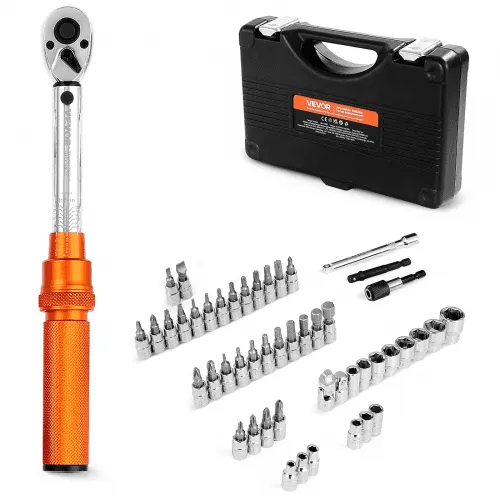


Results for Torque Wrenches
A torque wrench is a tightening tool that measures the rotational force applied to a fastener and signals when a preset value is reached. Instead of relying on feel, the operator dials in a target, turns the bolt, and stops at a click, a readout, or a buzzer. This controlled force keeps a fastener tight enough to hold under load yet not so tight that threads stretch, parts distort, or components crack. By making tightening repeatable and measurable, a torque wrench protects safety-critical joints and ensures each fastener meets the required specification every time.
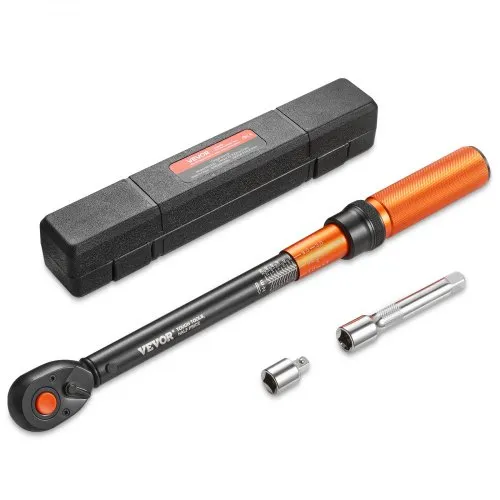
Across the range, torque wrenches split by how they read force and by drive size. Mechanical click torque wrenches snap at a set value and need no battery, while digital torque wrenches add an LED readout, presets, and audible alerts. Drive sizes run 1/4 inch for light work up to 3/4 inch for heavy bolts, and multi-piece torque wrench sets bundle several drives with adapters and extensions. Ranges span from a few inch-pounds for delicate parts to several hundred foot-pounds for lug nuts. Typical uses are automotive repair, engine and suspension assembly, bicycle and small-equipment maintenance, and spec-critical industrial fastening.
Four things decide what you need:
- Torque range: pick a tool whose range places your target near mid-scale, where readings are most accurate, rather than at either extreme.
- Drive size: 1/4 inch suits bikes and electronics, 3/8 inch medium automotive work, and 1/2 inch or larger handles lug nuts and heavy bolts.
- Readout type: a click wrench gives fast, battery-free feel, while a digital model shows exact live numbers, presets, and memory for varied specs.
- Accuracy and calibration: tighter tolerance (around plus or minus 2 percent) matters for critical joints, and any torque wrench should be rechecked after a drop or heavy use.
Ready to dial in the right tool? Browse the full torque wrenches range to compare drive sizes and ranges, or focus on digital torque wrenches when a live readout and presets matter most.
Torque Wrench Types at a Glance
The category covers a few distinct tool families; this table lines up how they read force, what they drive, and where each fits before you compare individual products.
| Type / Sub-type | Readout Method | Drive Sizes | Torque Range Span | Selection Note |
|---|---|---|---|---|
| Click torque wrench (single) | Mechanical, audible click | 1/4 in to 3/4 in | Inch-pounds up to ~600 lbf-ft | Battery-free, fast feedback for set-and-go spec work |
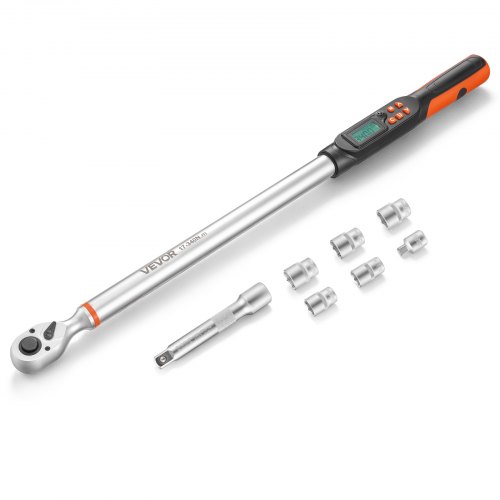
| Digital torque wrench (single) | LED/LCD plus buzzer | 3/8 in to 1/2 in | ~5 to 340 N·m by model | Live numbers, presets, and memory for varied specs |
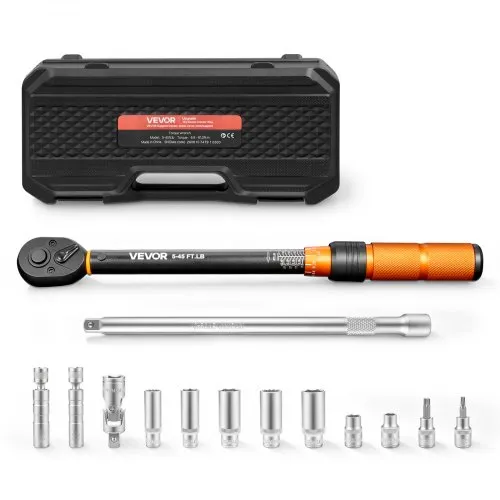
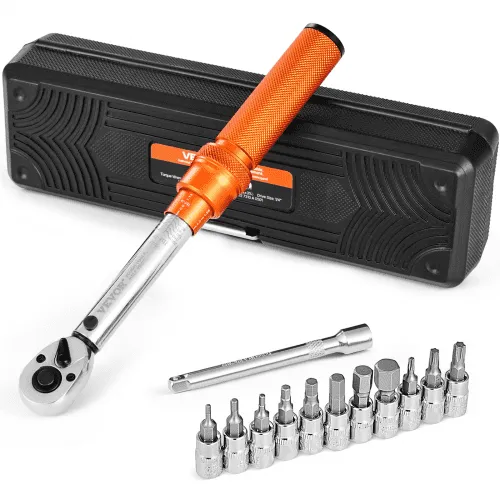
| Click torque wrench set | Mechanical, multi-drive | 1/4, 3/8, 1/2 in | Low to mid, across drives | One kit covers small to mid fasteners in several drives |
| Digital torque wrench set | Electronic, multi-drive | 3/8, 1/2 in | Mid-range, across drives | Digital accuracy when you switch between drive sizes |
Digital Torque Wrenches Featuring Clear LED Displays and Audible Torque Alerts
VEVOR offers a wide range of digital torque wrenches for various tasks and levels of accuracy. Electric torque wrenches automatically apply torque to save time, while manual digital torque wrenches let you control torque exactly as you want. The3/8 torque wrenchis great for fixing cars and doing medium-duty fastening, while the 1/4 torque wrench is better for lighter jobs like fixing bikes or electronics.
These torque wrenches can be used in many different situations. Car enthusiasts and professional mechanics can work on engines, frames, and assemblies with exact torque. Easy-to-read LED screens, preset torque values, and audible alerts are all helpful for people who do DIY projects at home. Complete torque wrench sets come with different drive sizes and adapters so that you can do any fastening job with just one set.
Essential Performance Metrics: Range, Precision, and Consistency
Torque Range Selection for Automotive, Mechanical, and Precision Fastening
The first step in choosing a digital torque wrench is selecting the right torque range. It is because every job, from fixing cars to assembling things with precision, requires a certain amount of force to hold fasteners in place. A 1/4-inch torque wrench usually has a lower torque range, which is best for fragile parts like bicycle bolts, electronic housings, and small mechanical parts. These tools let users fine-tune the torque values without worrying about stripping threads or breaking parts. A 3/8 torque wrench is a good choice for medium-duty work because it can be used on engine covers, suspension parts, and industrial assemblies.
Higher torque ranges are useful for fixing cars and other equipment, where large bolts require a lot of force to tighten. In busy workshops where torque needs to be applied repeatedly, an electric torque wrench is especially useful because it reduces user fatigue and improves accuracy. For professionals who want a high-quality feel and high accuracy, models that work like a snap on torque wrench provide smooth gear engagement and very consistent readings. Users keep their tools in good condition, avoid overtightening, and ensure fasteners last longer by matching the torque range to the job.
A digital torque wrench with a wide range of settings is great for general automotive work, as many repairs require torque values between 10 and 150 ft-lb. The LED or LCD readout speeds up setup and lets you dial in the exact torque, which is helpful for tasks that require exact adherence to manufacturer specifications. Memory presets that track commonly used torque settings are helpful for workshops that work on everything from spark plugs to engine mounts. Matching a tool's torque capabilities to a job's needs ensures stable, predictable fastening results.
Accuracy for Consistent Results Across Repetitive Fastening Jobs
Among the most important performance factors when judging a digital torque wrench is accuracy. This is especially true for mechanical assemblies, where torque tolerance affects safety, alignment, and part life. The tool is reliable and will always give you the same results, whether you are tightening engine bolts or calibrating machinery. It usually has an accuracy rating between ±1% and ±3%. The electric torque wrench is fast and accurate because it applies torque automatically. This makes it ideal for tasks that require high repeatability, such as production lines or routine car maintenance. It helps maintain a consistent clamping force and reduces manual variance.
The common analogy is a snap on torque wrench (for technicians who care about how accurate their tools are). Snap on torque wrenches are known for their low backlash and consistent torque transfer. This is how you feel in quality digital models with sophisticated sensors and microchip-controlled alert systems. For example, a 1/4 torque wrench requires very accurate readings to avoid damaging delicate threads, and a 3/8 torque wrench used in moderate automotive work needs to remain accurate after many cycles.
Digital readouts, audible alerts, and vibrating handles help improve accuracy by informing you exactly when you have reached the target torque. It takes the guesswork out of clicky tools. Some models record torque history, so users can see previous settings. It is good for maintenance logs or doing the same thing over and over. A good digital torque wrench keeps fasteners tight through vibration, temperature changes, or heavy load cycles. It shields vital parts from too early breakage.
Mechanical Applications: Torque Range & Accuracy Comparison
A digital torque wrench is a good choice for many garage and workshop applications that require the same torque range and accuracy. For cars, midrange torque values are very important for lug nuts, engine parts, and suspension bolts. The 3/8 torque wrench is still the best wrench for these jobs because it provides the right torque for precise and medium-duty fastening. A 1/4 torque wrench is very handy for assembling bikes or electronics because it is compact and sensitive in the low range .
Electric torque wrenches are perfect for assembly lines and maintenance crews, as they can repeatedly deliver high torque. Differences between cycles have been reduced, and cycles have been made more consistent by digital sensors and automatic stop features. This feature is better for repetitive fastenings. For a workshop that requires flexibility, a full set of torque wrenches is the best bet, offering a variety of drive sizes for maximum coverage. The kits allow technicians to easily switch between low and high torque jobs without sacrificing accuracy.
In precision environments, the tools’ performance is often compared to popular brands such as the Snap-on torque wrenches. Digital units that replicate this degree of accuracy and provide modern features like alerts and memory are a steal for professionals and advanced DIYers alike. Torque range and accuracy selection ensure all fastening procedures are safe, repeatable, and to the manufacturer’s standards. A digital torque wrench, used correctly, is a vital tool for keeping cars, machinery, and household items in good working order.
Choosing a Torque Wrench by Job
The table below matches common jobs with the appropriate range and accuracy requirements, highlighting the key selection criteria and potential limitations to consider for each application.
| Job / Scenario | Suggested Drive | Key Consideration | What to Watch For |
|---|---|---|---|
| Bike and electronics assembly | 1/4 in | Low-range resolution | Fine targets strip threads easily, so resolution matters more than top-end range |
| General car maintenance | 3/8 in | Mid-scale accuracy | Most repairs fall around 10 to 150 ft-lb; keep the target near mid-scale where readings are truest |
| Lug nuts and suspension | 1/2 in | Clamping consistency | Torque to seat, then recheck; never use the torque wrench itself to crack nuts loose |
| Repetitive shop or production work | Electric or digital | Repeatability | Presets and auto-stop cut cycle-to-cycle variance; a history log helps quality checks |
| Spec-critical assembly | Digital, tight tolerance | Calibration | Verify the calibration date; accuracy drifts after a drop or heavy use |
Features & Display Type Overview
A modern digital torque wrench is easier to use because it has LED or LCD screens, sound alerts, and vibration indicators that show when the target torque is reached. These screens show real-time readings, let you switch modes, and let you save frequently used values. Backlit screens and easy-to-use buttons make it easy to see and make precise adjustments with any torque wrench, whether it's a3/8, 1/4, or electric one. It is true in garages, workshops, and other low-light areas.
Best-Seller Comparison
With types and performance covered, here is how the first five products in this category compare on the specs that separate them.
| Product | Type | Drive Size | Torque Range | Accuracy | Readout / Feedback | Best For |
|---|---|---|---|---|---|---|
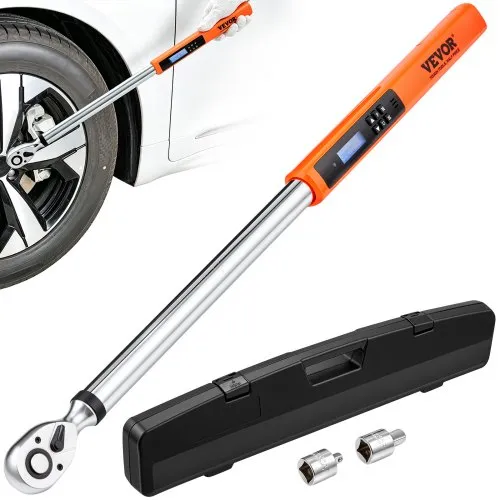
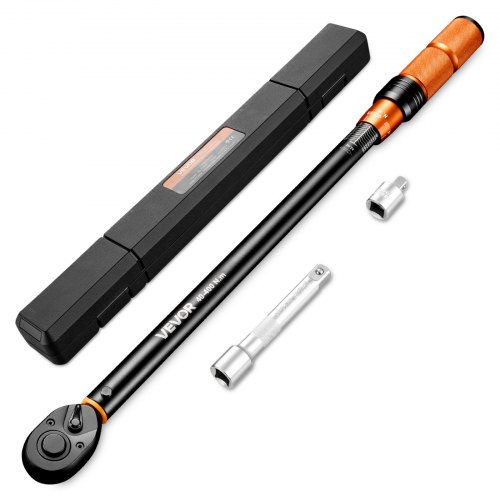
| Click Torque Wrench, 3/4 in | Mechanical click | 3/4 in | 100-600 lbf-ft | ±3% | Dual scale, audible click, 48-tooth | Highest torque ceiling here; large truck and equipment lugs |
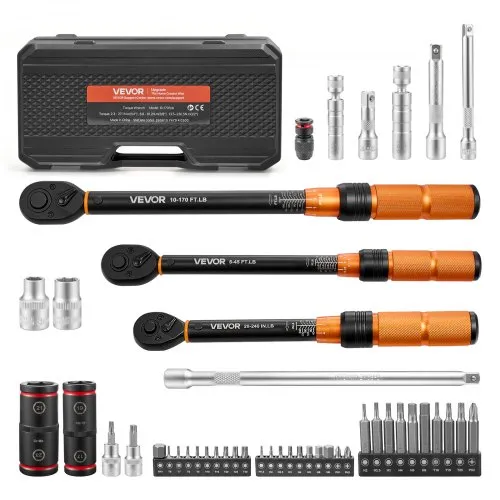
| Click Torque Wrench Set, 3-Piece | Click set (3 pc) | 1/4, 3/8, 1/2 in | 20 lbf-in to 170 lbf-ft | ±3% | Dual scale, audible click, 72-tooth | Only multi-drive set here; small to mid fasteners in one kit |
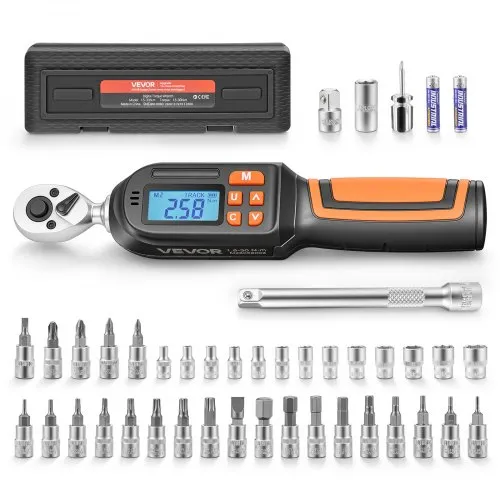
| Digital Torque Wrench Set, 2-Piece | Digital set (2 pc) | 3/8, 1/2 in | 3.7 to 147.5 ft-lb | ±2% | LED plus buzzer, 72-tooth | Digital accuracy across two drives; varied live specs |
| Digital Torque Wrench, 1/2 in | Digital electronic | 1/2 in | 25-250 ft-lb | ±2% | LED plus buzzer, 3-mode | Widest single-tool digital range; general automotive torquing |
| Digital Torque Wrench, 3/8 in | Digital electronic | 3/8 in | 3.7-37 ft-lb | ±2% | LED plus buzzer, 3-mode | Lowest, finest range here; delicate low-torque work |
Why Choose VEVOR Digital Torque Wrench?
VEVOR offers a full line of digital torque wrenches, including 3/8-inch, 1/4-inch, electric, and full torque wrench sets. These wrenches are accurate, long-lasting, and easy to use, making them great for professional use in cars, factories, and homes. Go to the product page to learn more about the specifications, compare models, and buy the best digital torque wrench for precise and dependable torque control.
FAQs
How much do torque wrenches cost?
Cost depends on the readout type, drive size, and whether it is a single tool or a set, and prices change by region and promotion, so check the live listing for each model. Mechanical click wrenches sit at the entry level, while digital models and multi-piece torque wrench sets cost more. View current figures on each product page.
Can you recommend the best torque wrench for automotive repairs?
For general car work, a 1/2-inch drive wrench in the 10 to 150 ft-lb range covers most lug nuts, suspension, and engine fasteners. A digital 1/2-inch model adds presets and a live readout. Compare options in the torque wrenches range and size the range so your common specs sit mid-scale.
Can you recommend the best torque wrench set for cycling repairs?
Bike work uses low torque on delicate threads, so a 1/4-inch drive set with fine low-range resolution is the safest choice. Look for a set with small sockets and bits and clear markings. A low-range click or digital tool helps avoid stripping stem, seatpost, and component bolts.
How do I choose the right torque wrench for bike maintenance?
Match the tool to the low torque values bikes use, typically well under 40 ft-lb. Choose a 1/4-inch drive with fine resolution, confirm the range covers your component specs near mid-scale, and favor a model with clear graduations or a digital readout so small targets are easy to set precisely.
What is the difference between a 3/8 inch and a half inch torque wrench?
The number refers to the square drive that holds the socket. A 3/8-inch drive suits lighter, medium-duty work with lower torque ranges, while a 1/2-inch drive handles higher torque such as lug nuts and large bolts. The larger drive and heavier build trade some low-end sensitivity for greater capacity.
What are the main differences between torque wrenches and regular wrenches?
A regular wrench only turns a fastener; you judge tightness by feel. A torque wrench measures the force applied and signals when a preset value is reached, so joints are tightened to an exact specification. Use a regular wrench for loosening and general turning, and a torque wrench for the final, spec-critical tightening.
What are the top-rated performance tools torque wrenches available online?
Shoppers usually weigh accuracy, torque range, drive size, and whether a set is included rather than any single label. The best-seller table above lists the most popular models in this category with their key specs, which is the most reliable way to compare current top performers side by side.
Can you recommend the best torque wrenches for electricians?
Electrical work often calls for low, precise torque on terminals and lugs to meet published specifications. A 1/4-inch or 3/8-inch drive with a low range and a clear readout suits panel and connector work. A digital model with presets helps apply the exact value each terminal requires without overtightening.
Can cordless torque wrenches provide the same power as corded ones?
Cordless electric torque tools can match many corded or pneumatic tools for common fastening, and they add portability and consistent presets. Very high-torque or continuous production tasks may still favor corded or air-powered tools for sustained output. For most automotive and workshop jobs, a quality cordless or digital wrench is more than capable.
What size torque wrench do I need?
Size by the torque your fasteners require and the drive that matches your sockets. Light work (bikes, electronics) suits 1/4 inch, medium automotive work 3/8 inch, and lug nuts or heavy bolts 1/2 inch or larger. Choose a range that places your usual targets near the middle of the scale.